 January 6, 2026
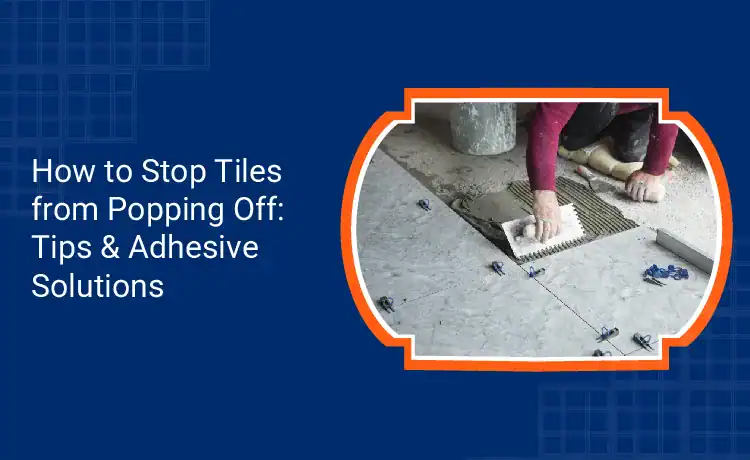
Tile floors and walls add strength and beauty to a room, but over time, they can present some problems, one of the most common being tile popping. It is frustrating and hazardous when tiles all of a sudden loosen, lift, or detach from the floor or wall. Without addressing the cause, repairing them often leads to repeated problems. Understanding why tile popping occurs, how modern adhesives prevent these failures, and the right way to repair loose tiles can avoid accidents and ensure stable surfaces for years to come.
This guide explains the causes of tile popping, how to fix them correctly, and which materials ensure strong and durable installations.
Tile popping is the condition where tiles begin to lift, move, or detach from the surface because of a weakened or broken bond. The first signs may be a hollow sound, slight movement, or visible cracks before the tile eventually lifts off completely. In most cases, it occurs when the adhesion between the tile and substrate fails, allowing air, moisture, or pressure to build up beneath. Without a strong bond, tiles tend to become unstable and prone to potential damage.
Early identification will be able to help one avoid extensive repairs and further deterioration. Most of the reasons why tiles come off the floor are directly related to issues with the installation process, adhesive selection, or environmental stress.
Surface preparation is one of the most crucial steps in tiling. When the substrate is uneven, dusty, oily, or poorly levelled, one cannot correctly bond the adhesive. The loose particles create gaps under the tiles, creating weak spots that will eventually lead to detachment. Without proper cleaning or priming, even high-quality adhesives could never form a strong bond, leading to the displacement of tiles over time.
Traditional sand-cement mortar is commonly used, but it shrinks as it dries. The shrinkage creates air pockets beneath the tiles and prevents uniform bonding. Over time, tiles begin to loosen, creating hollow noises or visible gaps. These voids also weaken the load-bearing capacity, resulting in cracks in the tile or complete separation from the substrate.
Floors and tiles naturally expand and contract due to temperature changes. Where there is a lack of flexible adhesive, these movements cause stresses that make the tiles shift or lift. Areas that receive direct sunlight, for example, balconies or terraces, are prone to being affected. Sudden temperature variations elevate this condition, leading to tile popping.
The other major contributor is moisture. Water, when it seeps through the substrate or the adhesive layer, weakens this bond radially. Seepage problems in bathrooms, balconies, and kitchens push tiles upward or outward. Water also chemically reacts with cement to produce salts that expand and force the tile to detach.
Either improper spacing or low-quality grout can cause pressure to build up between tiles. Whenever tiles are installed too close together, they have little room for adjustment in cases of slight movements or expansion. Weak grout also fails to seal the joints, which allows moisture penetration that eventually leads to tile popping.
The tile adhesive proves to be a useful companion to solve issues by providing:
Modern tile adhesive solutions are all polymer-modified to assure strong, durable bonding. Unlike traditional mortar, adhesives create a uniform bond layer that firmly grips both tile and substrate, preventing voids and tile movement.
One of the major advantages of high-quality adhesives is flexibility. They accommodate thermal expansion and contraction, absorbing stress instead of transferring it to the tiles. This reduces the likelihood of lifting, cracking, or popping, especially in large-format tiles or outdoor installations.
Water-resistant adhesives serve to insulate the bond layer against dampness and are applied in bathrooms, kitchens, balconies, and even exterior walls. These prevent seepage-related tile popping by keeping stability even in areas with high moisture.
Tile adhesives are premixed; they are consistently of the same quality. Their smooth texture allows for efficient spreading to provide thorough coverage below each tile. This helps eliminate air pockets, improve uniformity, and reduce curing times to speed up projects.
While mortar-based installations tend to degrade with time, adhesive-based installations come across as much stronger after a period of time. They resist movements and shrinkages along with the environmental damages to maintain the tiles intact for many years. However, for professional longevity, selecting products from a trusted tile adhesive manufacturer like MCON Rasayan may make all the difference.
Repairing loose or detached tiles is far easier with good-quality tile adhesive for loose tiles. Here’s how you can do it for a long-lasting repair:
Using adhesive instead of cement will ensure proper bonding, prevent repeated popping, and restore stability to your flooring or wall surface.
The selection of the right adhesive for tiles is tied to both the tile type and the installation area. Ceramic tiles require standard polymer-modified adhesives, while stronger bonding is required for vitrified tiles because of their low porosity.
For natural stone tiling, adhesives with non-staining formulations may be needed. Waterproof adhesives with strong bonding could be recommended for wet areas like bathrooms, swimming pools, and balconies.
MCON Rasayan makes a comprehensive range of tile adhesives and grouts that are designed for durability, flexibility, and professional finishing. Whether you are looking for adhesives for ceramic, vitrified, or stone installation, we ensure long-life performance with our customised solutions through being the trusted tile adhesive and tile grout manufacturer.
Tile popping can be avoided by utilising the right materials in combination, proper installation techniques, and using advanced adhesives that handle movement, moisture, and environmental stress. Whether it comes to repairing loose tiles or planning for new installations, modern adhesives offer unparalleled strength, flexibility, and reliability.
For a range of tile adhesive solutions, contact MCON Rasayan today and prevent your tiles from popping off for years to come.

Ashish Gupta is a general manager and civil engineer with over 10 years of experience in the construction chemicals industry. With his technical degree (B.Tech), extensive experience, and chemical shuffling skill, he has been responsible for executing technical solutions in areas like waterproofing, concrete repair, tile adhesive, admixtures, and protective coatings.

 08976907887
  sales@mconrasayan.com